
Adaptive Fee Pools are informationally different from fixed-fee pools. Fees may change over time, and LP outcomes depend on trading activity, liquidity, price movement, position range, and market conditions.
What are Adaptive Fee Pools?
Fixed-fee pools apply the same fee rate to each swap in that pool. Liquidity providers choose a pool with a specific fee tier, such as 0.05% or 0.30%, and swaps through that pool use that fee tier. Adaptive Fee Pools include two fee components:- Base fee — The pool’s base fee tier.
- Adaptive fee — A dynamic component that may increase when price movement or volatility conditions increase.
How to spot an Adaptive Fee Pool in the app
Adaptive fees appear in two places in the Orca interface:Pools page filter
Open the filter panel on orca.so/pools and toggle Adaptive Fees to show pools using this fee model.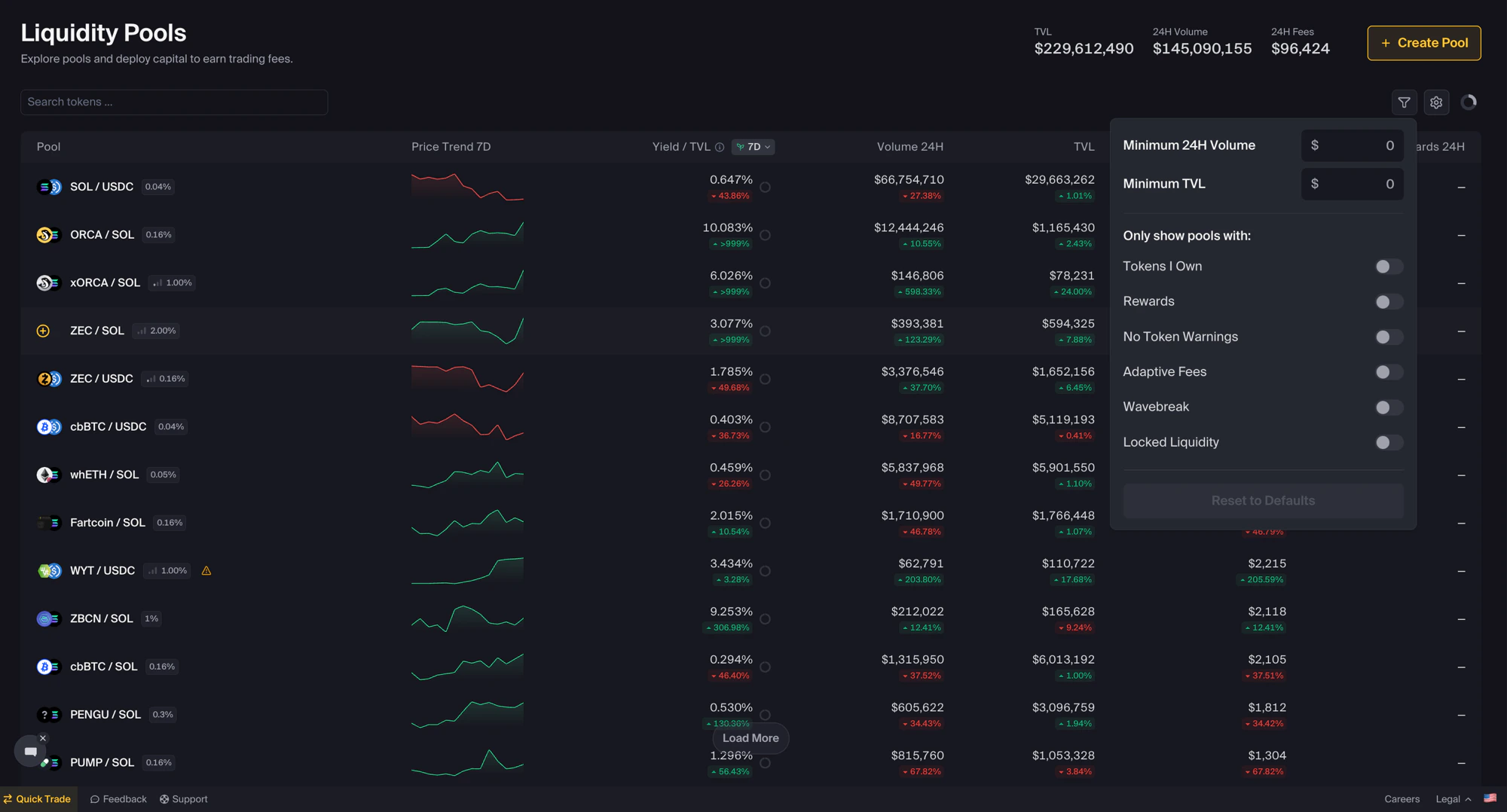
Toggle the Adaptive Fees filter on the Pools page to show adaptive-fee pools
Pool detail banner
On an adaptive-fee pool’s detail page, the Create Position panel shows an Adaptive Fees Enabled banner. The percentage shown is the current effective fee rate, including the adaptive component. This rate can change as market and pool conditions change.
The Adaptive Fees Enabled banner on a pool detail page shows the current effective fee rate including the adaptive component
Why Adaptive Fees exist
Market conditions can change over time. In fixed-fee pools, the trading fee remains the same even when volatility changes. Adaptive Fee Pools allow the effective fee rate to adjust when price movement increases. This can affect:- Fees paid by traders
- Fees accrued by liquidity providers
- The effective fee rate shown in the pool interface
How Adaptive Fees work
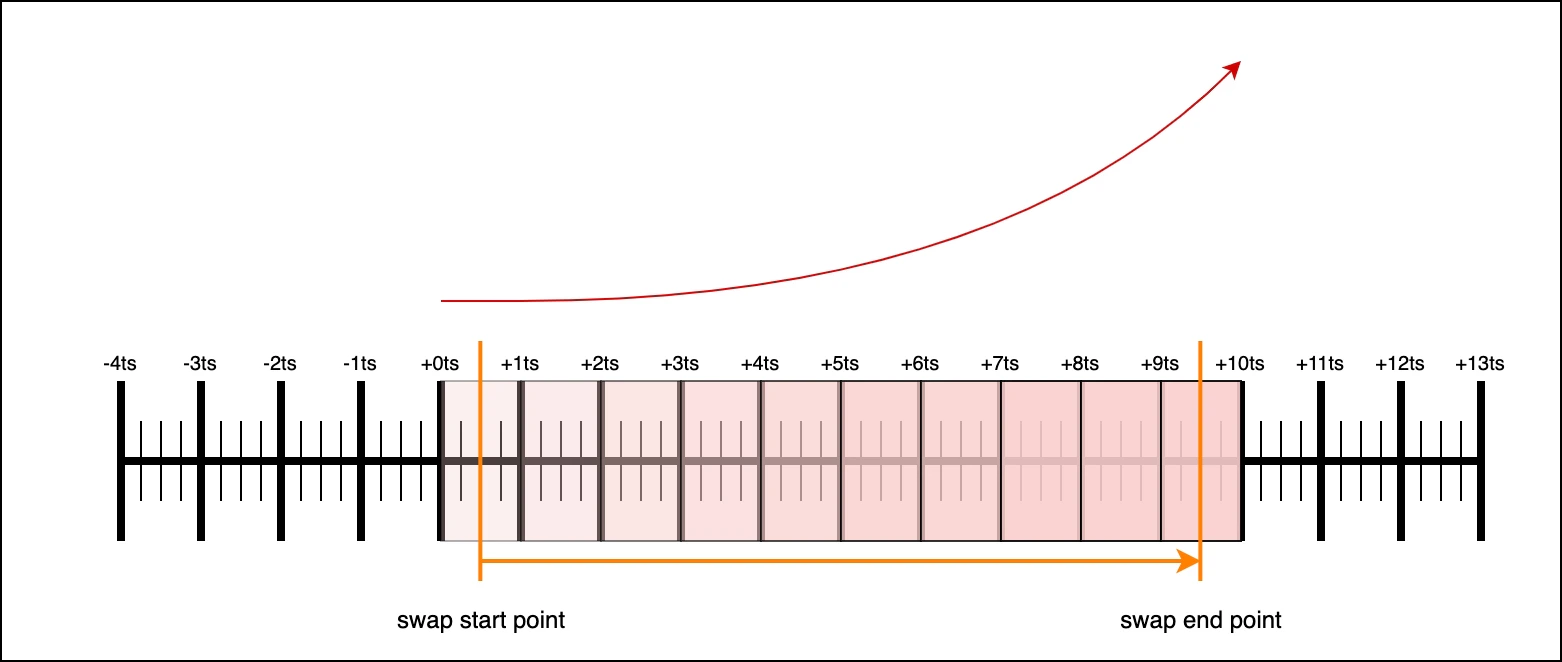
Adaptive Fee Pools adjust the fee based on price movement during swaps. Behind the scenes, the Adaptive Fee mechanism considers how far the price moves during a trade, including how many tick groups the trade crosses. If price movement is greater, the adaptive component may increase. If price movement is lower, the adaptive component may be lower. For the technical calculation, see the Developer Docs. Key idea:- If recent price movement is lower, the adaptive fee may be closer to the base fee.
- If recent price movement is higher, the adaptive fee may increase.
- The effective fee rate can change over time.
The effective fee rate is not fixed. Review the current fee information in the pool interface before creating or managing a position.
Adaptive Fee Pools and LP positions
From an LP perspective, Adaptive Fee Pools add a dynamic fee component to the usual concentrated liquidity position mechanics.
Adaptive Fee Pools may be relevant for users who want exposure to pools where the effective fee can change with price movement. They may also be less predictable than fixed-fee pools because the effective fee rate can vary.
What stays the same?
Many core Whirlpool concepts still apply:- Ticks and tick spacing define where liquidity is active.
- Fee tiers still apply as the base fee.
- LPs may accrue trading fees when swaps use liquidity in their active range.
- Positions can move in or out of range as price changes.
- LPs still need to monitor position range, token mix, fees, rewards, and market conditions.